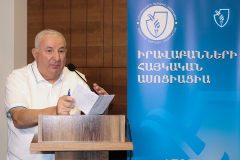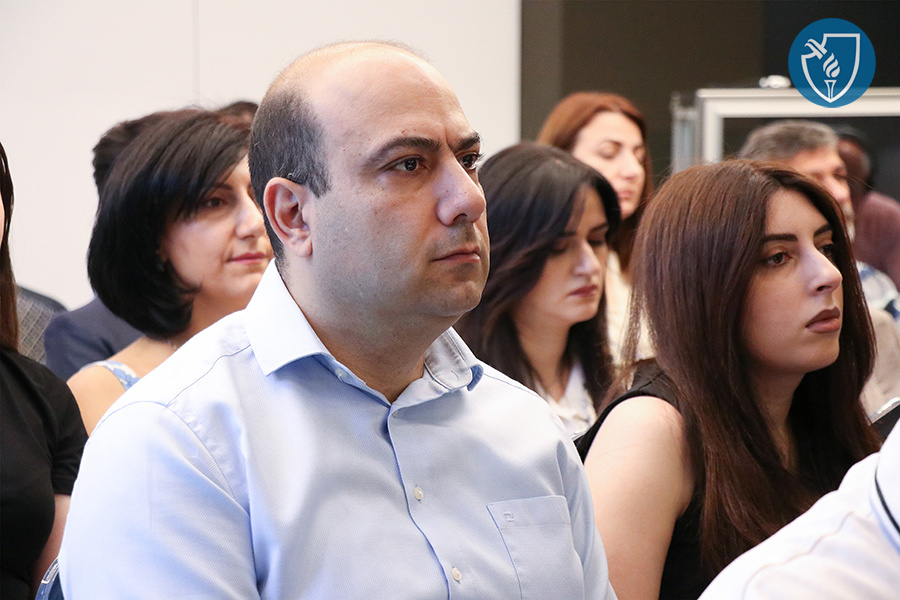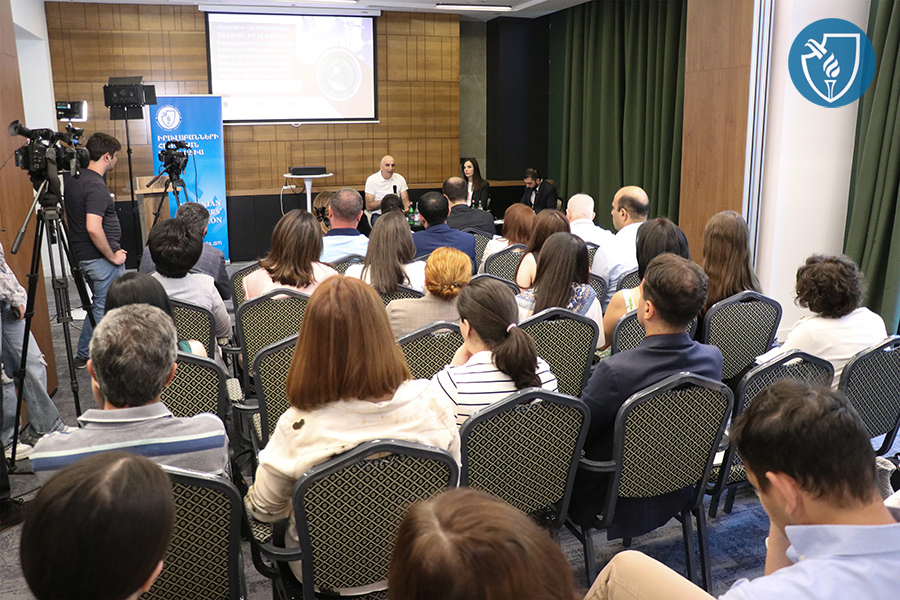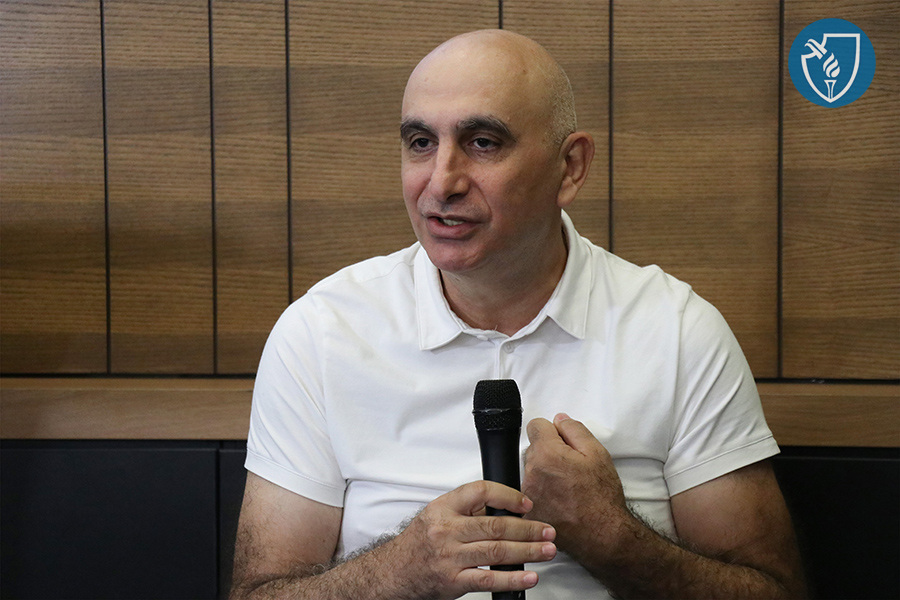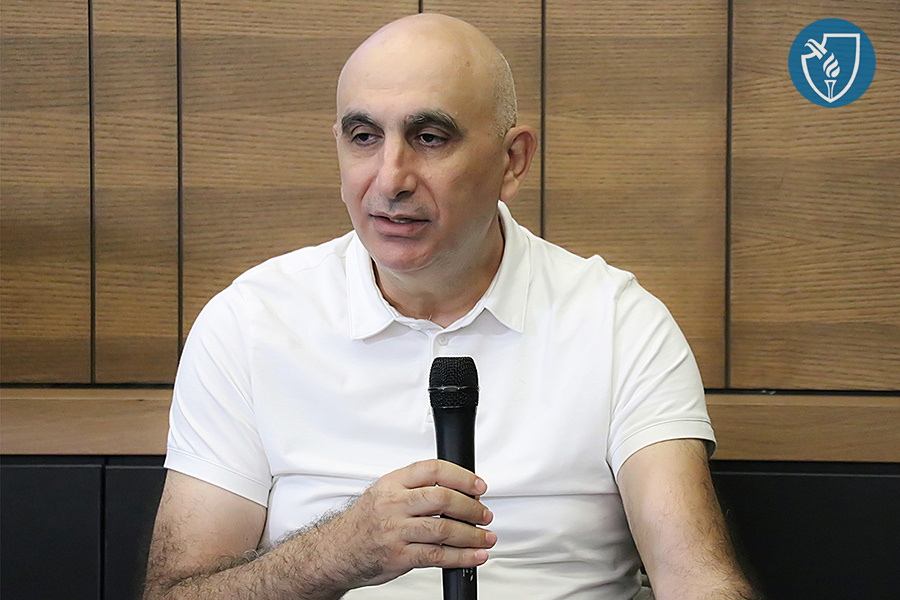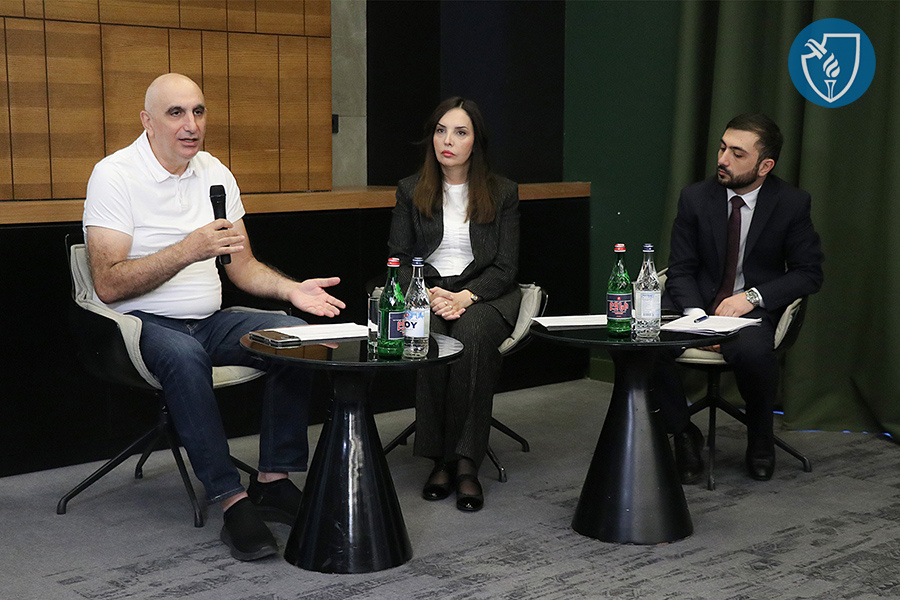

On June 25, the presentation of the public monitoring report on the implementation of the actions envisaged for 2022–2024 under the Judicial and Legal Reform Strategy of the Republic of Armenia and its 2022–2026 Action Plan took place.
Speaking about the monitoring results, President of the Armenian Lawyers’ Association Karen Zadoyan drew attention to four groups of issues. These concern, among others, the powers of the Ministry of Justice to initiate disciplinary proceedings against judges, the lack of an effective mechanism to appeal disciplinary decisions, and the application of severe disciplinary sanctions. In addition, Karen Zadoyan addressed the government’s decision to bring pro bono legal services provided by lawyers to the public into the taxation framework, the automated case assignment system, and the frequent use of detention as a preventive measure.
According to the ALA President, the small number of public defenders is also problematic.
“It is alarming that there are cases when a complaint is assigned to a specific judge and then withdrawn. This is a very dangerous phenomenon. Afterwards, applicants turn to the European Court of Human Rights. This does not do credit to our country. Judicial independence is not achieved effortlessly,” he stated.
Details are available in the video.
https://youtu.be/GHdPjn7ZN2w?si=7Mn9aTOUAn2eIk5f
Member of the Supreme Judicial Council Anahit Abrahamyan welcomed the multi-stakeholder discussion organized by the Armenian Lawyers’ Association and expressed gratitude for the development and presentation of such an important report.
“It is also necessary to look at any process through the eyes of an impartial observer, especially when it is carried out by the executive, the judiciary, or other bodies. The executive includes in the strategy those indicators for which it is responsible. However, the adoption of legal acts falls within the competence of the legislature, therefore the definition of certain indicators could be questionable,” Abrahamyan noted, adding that she had worked at the ministry during the development of the strategy.
Details are available in the video.
https://youtu.be/ekMP0OIYAxw?si=cGwKEAUP5cjMV-J3
Deputy Director of the “Legislation Development Center” Foundation of the Ministry of Justice, Romik Hayrapetyan, noted that a large-scale effort had been carried out by the civil society organization, within the framework of which the activities implemented by their institution were monitored.
“How successful we have been is presented in the report, although there are several observations with which we do not entirely agree. When assessing the actions envisaged by the strategy, we consider the implementation of a specific action. If it is stated that a legal act should be adopted or a draft should be developed, once the draft is prepared, the action is marked as ‘completed,’ since the drafting process itself is considered the action. At the same time, we also have outcome indicators through which it becomes clear what we have achieved or aim to achieve,” Hayrapetyan stated.
According to him, outcome indicators do not always coincide with the completion of actions.
Details are available in the video.
https://youtu.be/KmVZywrc0TA?si=0QkZwVABvPxmA7p0
Legal Expert of the Armenian Lawyers’ Association Suzanna Soghomonyan emphasized that the actions envisaged for 2022–2024 under the strategy were studied. In total, 79 actions subject to implementation during the specified period were examined.
“The largest number of actions falls under the first objective, which relates to the field of e-justice,” Soghomonyan noted.
According to her, strategies should be viewed as official documents of the Republic of Armenia that reflect the country’s vision for the coming years in a given sector. Therefore, it is concerning when, for a number of actions, full implementation is recorded merely on the basis that a draft legal act has been prepared and submitted to the Government of the Republic of Armenia, from where it will later be forwarded to the National Assembly for approval. Regardless of whether the government approves it or the National Assembly adopts it, from the moment the draft is submitted for discussion, the action is marked as completed—without tracking whether it has actually been adopted and whether the objectives envisaged by the strategy have been achieved.
She also added that the report was sent to all stakeholders and feedback on it was received.
Details are available in the video.
https://youtu.be/qn4F5SdlbPY?si=ZwSg7rL3qtAo3vN0
ALA lawyer Marianna Avagyan noted that the assessment was conducted in two ways. In the first case, only fully implemented actions were taken into account, while in the second case partially implemented and non-implemented actions were also considered.
“During the planning and drafting phase of the strategy, proper studies and discussions were not conducted, which resulted in practical problems. For example, the strategy includes an action that will not be implemented, as there is in fact no need for it,” Marianna Avagyan stated.
According to her, the monitoring results show that some of the actions were partially implemented or not implemented at all. She proposed setting more realistic deadlines for each action.
Details are available in the video.
https://youtu.be/8MxVD41sOss?si=kt7f3FMrTZesBgSg
It should be noted that the Extraordinary and Plenipotentiary Ambassador of the Republic of Lithuania, Andrius Pulokas, also participated in the event.
At the end of the discussion, the guests present addressed questions regarding the strategy and received comments on the issues of concern from representatives of state bodies.
Details are available in the video.
The report on the results of the public monitoring of the implementation of the actions envisaged for 2022–2024 under the Action Plan derived from the Judicial and Legal Reform Strategy of the Republic of Armenia for 2022–2026 is available here.
We also note that on June 25, 2025, the presentation of the report took place, within the framework of which the slide presentation is available here.