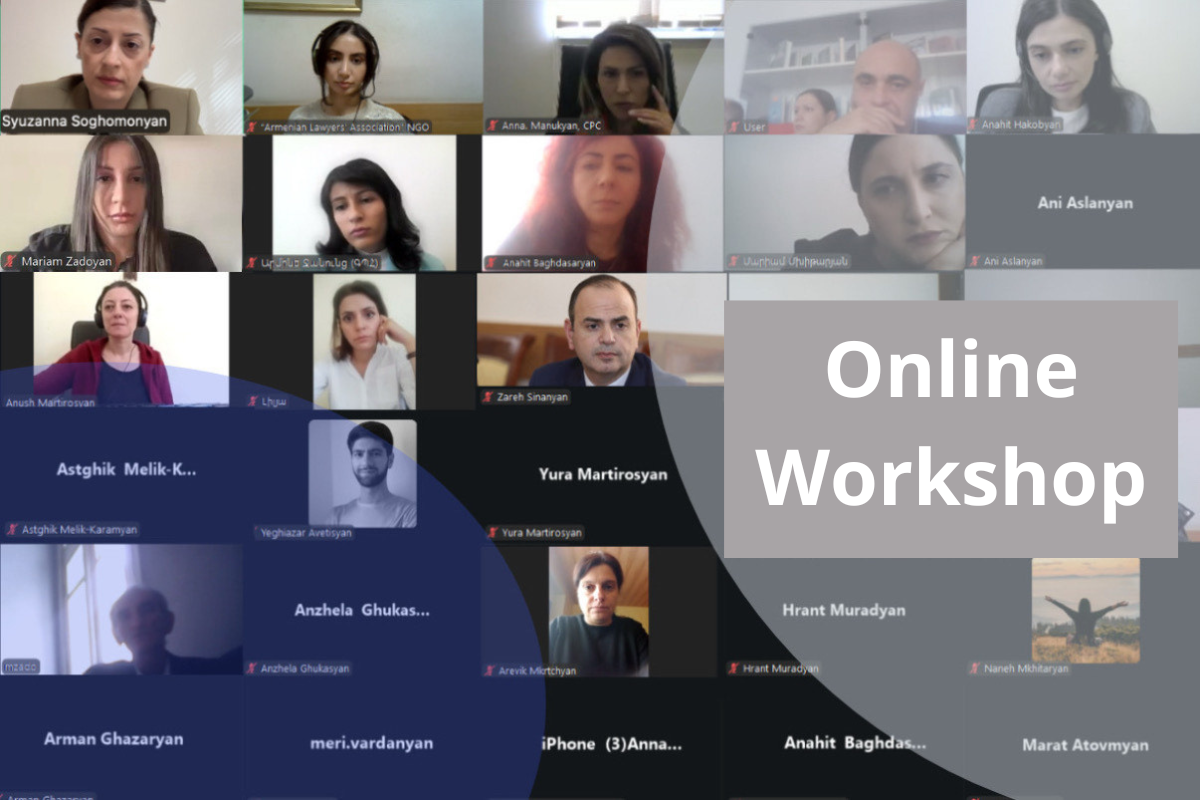
On 15 October 2025, the “Online Workshop on Countering Disinformation: Public–Private Dialogue Format” was held. The event was organized with the support of the Embassy of the Republic of Lithuania and within the framework of the program “Armenia’s Disinformation Resilience Academy: Strengthening Strategic Defense Capacities through the Transfer of Lithuania’s Experience”, implemented by the Armenian Lawyers’ Association (ALA).
Opening Remarks
The workshop opened with a speech by Marat Atovmyan, Vice President of the Armenian Lawyers’ Association, who emphasized the global nature of disinformation and its consequences in Armenia, highlighting the need for knowledge, skills, and cooperation.
Presentation of the Practical Handbook on Countering Disinformation
In the first part of the workshop, program experts Syuzanna Soghomonyan and Mariam Zadoyan presented the newly developed “Practical Handbook on Countering Disinformation”, intended for representatives of government authorities, civil society organizations, media, and the private sector.
The Handbook includes over 20 digital tools for detecting, verifying, and preventing disinformation, from source verification and bot detection to image verification and fact-checking. It also contains a glossary of more than 30 terms in Armenian and English, and a dedicated section on Lithuania’s experience in countering disinformation.
Developing a Roadmap with a Whole-of-Society Approach
The second part of the workshop focused on jointly defining the priorities of a Roadmap for Intersectoral Cooperation in Countering Disinformation, within the Whole-of-Society approach framework. Discussions covered Armenia’s disinformation strategy, ongoing activities, and existing challenges.
Key Perspectives:
-
Arman Ghazaryan, President of the Young Journalists’ Association NGO, noted that enhancing media literacy is a central component in countering disinformation. According to him, fostering critical thinking in education and society enables citizens to distinguish fact from falsehood and reduces the impact of disinformation.
-
Anush Martirosyan, President of Media for Education NGO, emphasized the importance of a systemic approach and called for the development of a fundamental legal act clarifying the responsibilities and rights of state institutions and other actors, including a digital security component, particularly for the protection of minors.
-
Zareh Sinanyan, Chief Commissioner for Diaspora Affairs, highlighted that disinformation often affects the diaspora more acutely than Armenia. Diaspora members usually do not verify information and have little time to analyze what they receive, making them more vulnerable. In communities with direct connections to Armenia—through family, relatives, or social ties—the impact of disinformation is significantly mitigated because information can be compared with real events. He also stressed the need to ensure reliable information flows and continuous communication between Armenia and the diaspora to counter disinformation.
Representatives from the Ministry of Education, Science, Culture, and Sports and the Central Election Commission presented current measures to develop media literacy and critical thinking, including programs in schools and universities, as well as strategic plans for countering disinformation.
Consensus and Key Priorities
Workshop participants unanimously emphasized that effective counter-disinformation efforts require close cooperation among government authorities, civil society, and media institutions. Three priority directions were highlighted:
-
Legal and institutional strengthening — establishing clear rules and accountability mechanisms;
-
Public education and media literacy development — fostering critical thinking and a trustworthy information environment;
-
International cooperation — experience exchange and joint program implementation.
The organizers stressed that such public–private dialogues should become regular, contributing to more effective counter-disinformation measures and enhanced public trust.
A parallel public–private dialogue workshop was also held on 16 October 2025, ensuring broader participation.
This article was prepared within the framework of the program “Armenia’s Disinformation Resilience Academy: Strengthening Strategic Defense Capacities through the Transfer of Lithuania’s Experience”, implemented by the Armenian Lawyers’ Association (ALA). The program is funded by the Embassy of the Republic of Lithuania in Armenia, within the framework of Lithuania’s Development Cooperation and Democracy Promotion Programme. The content is the responsibility of the ALA and does not necessarily reflect the views of the Embassy or the Government of Lithuania.